In a country where success stories are often measured by titles, salaries, or exits, there is another kind of progress that quietly shapes careers long before recognition arrives: contribution. The act of showing up, sharing knowledge, and helping others grow, without expecting immediate reward.
Few journeys reflect this better than that of Waleed Najam, whose path from local student communities to being recognised as a Forbes Member Leader is rooted not in visibility, but in value.
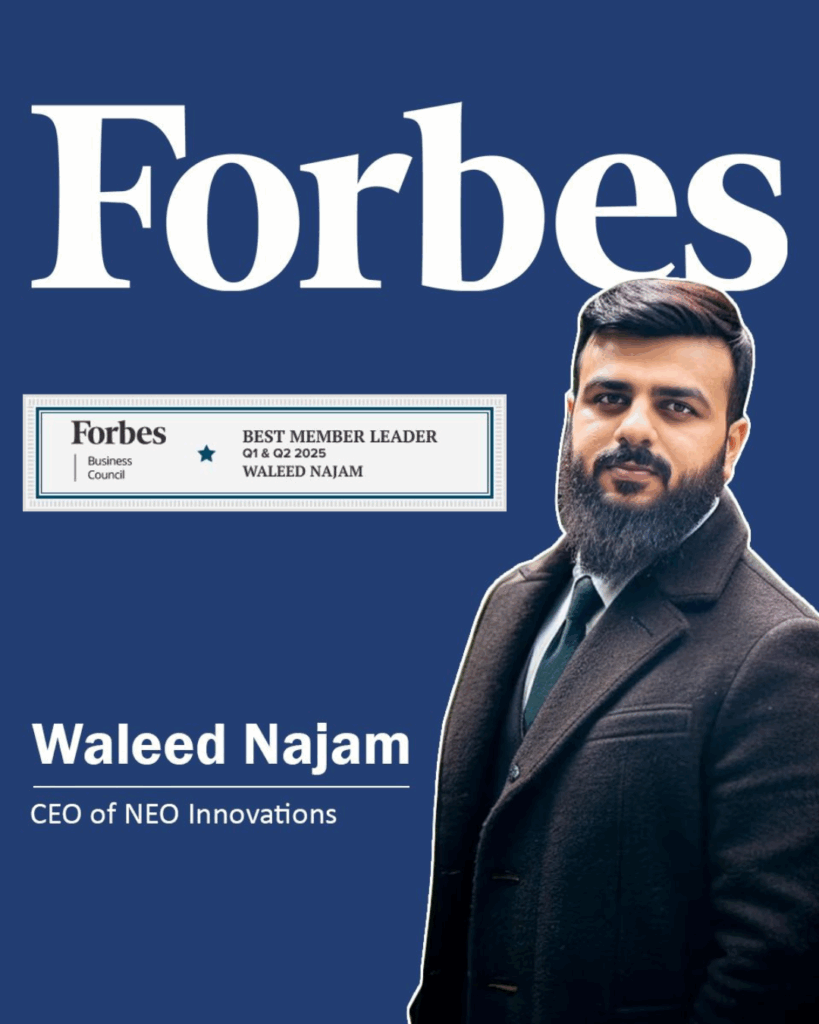
Waleed Najam getting a Forbes Member Leader Award is not a story of overnight success. It is a story of consistency, learning, and contribution.
Where does it begin?
Long before global platforms and leadership titles, Waleed Najam’s professional growth began in local student clubs, small communities, and peer-led learning environments. These spaces, often overlooked, are where real leadership quietly takes shape.
As a student, he didn’t wait for perfect conditions or formal authority. He participated. He asked questions. He shared what he learned. Whether it was discussing digital skills, helping peers understand emerging online opportunities, or contributing to group initiatives, his focus remained simple: add value where you can.
These early experiences instilled two habits that would later define his leadership style:
- Learn relentlessly
- Share generously
In environments where resources were limited, contribution became currency.
From Learner to Practitioner
As Waleed transitioned into the professional world, his mindset didn’t change. He entered the digital ecosystem at a time when freelancing, e-commerce, and online services were still misunderstood by many in Pakistan.
Instead of positioning himself as an expert, he positioned himself as a practitioner. He tested ideas, failed often, learned quickly, and openly shared insights with those around him.
What set him apart wasn’t just execution; it was the willingness to explain how things worked. From SEO learnings to growth strategies, he focused on practical knowledge that others could apply immediately.
Contribution, at this stage, was not about building a personal brand. It was about building competence, his own and that of others.
Leadership Without a Title
One of the most overlooked aspects of leadership is that it often appears before recognition does.
As Waleed’s work expanded across digital marketing, e-commerce, and cross-border operations, people began seeking his perspective, not because he marketed himself as a leader, but because his input consistently solved problems.
He became known for:
- Breaking complex problems into simple frameworks
- Sharing real-world insights instead of theory
- Offering solutions that were practical, not performative
This naturally led to informal leadership roles, mentoring peers, guiding teams, and contributing to professional communities.
Leadership, in his case, was earned through usefulness.
Entering Global Communities
When Waleed joined global professional networks like the Forbes Business Council, the same approach followed him.
He didn’t enter these spaces to observe quietly or promote himself. He participated actively. He contributed to discussions. He shared tested insights. He responded to challenges raised by other members.
Within the Forbes e-commerce community, his contributions stood out because they were grounded in execution.
Instead of generic advice, he shared:
- What worked
- What failed
- What saved time and resources
- What could be applied immediately
His e-commerce group, launched within the council, quickly became a go-to space for members looking for practical fixes rather than surface-level commentary.
Recognition Rooted in Impact
Waleed Najam’s recognition as Best Member Leader – E-Commerce (Q1 & Q2 2025) did not come from popularity or visibility. It came from consistent contributions.
The award acknowledged:
- Knowledge shared consistently
- Dedication to helping others grow
- A generous approach to problem-solving
- Practical solutions that members could actually implement
What makes this recognition meaningful is what it represents: leadership defined by service, not status.
From local student groups to one of the world’s most respected professional councils, the thread remained the same: contribute first.
Why This Story Matters?
For young professionals and entrepreneurs in Pakistan, this journey carries an important lesson.
You don’t need perfect infrastructure to start contributing.
You don’t need global exposure to begin leading.
You don’t need recognition to add value.
Contribution starts where you are, classrooms, communities, teams, and online spaces.
Waleed’s journey challenges the idea that leadership must be loud or immediate. Instead, it shows that consistent value creation eventually finds its stage.
Contribution as a Career Strategy
In a fast-changing digital economy, skills evolve quickly. Titles don’t last. Platforms change.
What remains relevant is the ability to:
- Learn continuously
- Share openly
- Solve real problems
Contribution builds trust. Trust builds influence. Influence eventually builds leadership.
This is the framework Waleed Najam has followed, often quietly, sometimes unnoticed, but always consistently.
Recognition like the Forbes Member Leader Award is not an endpoint. It’s a reflection of a journey that began long before global platforms took notice.
From student clubs to professional communities, the lesson is clear:
Leadership grows where contribution is consistent.
For Pakistan’s emerging talent, this story serves as a reminder that meaningful careers are not built by chasing recognition, but by earning it, one contribution at a time.
And sometimes, the most powerful journeys begin by simply helping someone else move forward.

He is an SEO wizard and founder of Top Study World & Nafran, has been featured more times than a celebrity on Ahrefs, Semrush, Dawn News, Propakistani and dozens more. His superpower? Helping students ace their exams!